Copper Will No Longer End Up in Tailings: Scientists Propose a Way to Extract the Metal from Difficult-to-Refine Ores
21 August 2026 г.
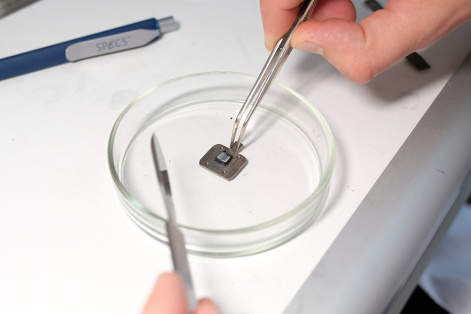
Valleriite is a rare mineral with a layered structure and a rich chemical composition. It is of significant industrial importance due to high contents of valuable metals. The largest commercial valleriite deposits are located in Western Siberia, particularly in the Norilsk ore district and the Kingash ore cluster. In these ores, valleriite serves as an important carrier of copper, nickel, and platinum-group metals. However, the enrichment of valleriite-containing ores faces challenges related to the valleriite’s unique crystal structure consisting of alternating sulfide and hydroxide layers with different properties with respect to reagent solutions. As a result, the mineral is lost in waste, which reduces the copper and nickel extraction efficiency and makes ore processing unprofitable.
Scientists from the Krasnoyarsk Scientific Center, Siberian Branch of the Russian Academy of Sciences, in collaboration with colleagues from the Siberian Federal University, have found a way to efficiently extract copper from valleriite. It has been shown that the extraction of valuable metals from valleriite can be improved using an acidic environment. This alters the properties of the mineral's surface by partially dissolving its hydroxide layers, thereby allowing reagents to access copper-rich sulfides. This approach ensures the copper extraction of up to 59% without pretreatment and up to 80% after additional treatment with sodium sulfide. In an alkaline environment, however, the extraction remains at a level of 10–15%.
"Our team has shown that the poor flotation of valleriite is a feature of its surface that can be used to our advantage," comments Cand. Sc. Roman Borisov, a senior researcher at the Institute of Chemistry and Chemical Technology, SB RAS. "We have thoroughly examined the behavior of natural samples of this mineral and demonstrated that, by controlling the acidity of the environment, we can remove the hydrophilic shell, allowing reagents direct access to valuable sulfides. The laboratory hydrothermal treatment still appears too energy-intensive for use in processing plants. Nevertheless, the key conclusion has already been drawn: even acidification alone, without complex pretreatment, yields a dramatic increase in recovery. Our goal now is to optimize the process parameters to make the proposed technology cost-effective and easily integrated into processing chains at the plants.".
"X-ray photoelectron spectroscopy and cyclic voltammetry allowed us to evaluate the valleriite surface state to a depth of several nanometers," comments Cand. Sc. Maxim Likhatskii, Head of the Laboratory of Hydrometallurgical Processes at the Institute of Chemistry and Chemical Technology, SB RAS. "We confirmed that copper on the mineral surface is in the sulfide form and remains electrochemically active precisely in an acidic environment. We also observed an increase in the sulfide sulfur and copper contribution after the hydrothermal treatment in a sodium sulfide environment, which is a key change in the surface state necessary for increasing copper recovery."
This finding continues the investigations of the Krasnoyarsk team, which previously learned to create synthetic analogues of valleriite-group minerals under the laboratory conditions. Now, the scientists have successfully moved from models to the real Norilsk ores, opening the way to waste-free and cost-effective processing of the riches of the Siberian subsoil.
Share: