
Mosses Helping Siberian Forests Withstand Fires and Deforestation
8 September 2026 г.
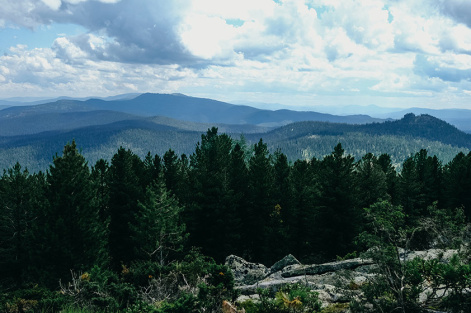
Fires and deforestation affect differently the soil of Siberian pine forests. Much depends on what grows on the surface. Scientists have found that lichen-covered areas suffer the most after a fire, while moss-covered areas are more resilient. Taking these features into account will allow for the more accurate evaluation of the consequences of fires and deforestation, understanding how different forest areas will recover, and guiding forest management. The results have been published in the Climate Journal.
Forests play a vital role in the global carbon cycle. A forest's carbon balance is determined by the amounts of carbon dioxide absorbed and released back into the atmosphere. A source of carbon loss in forest ecosystems is soil respiration, i.e., the release of carbon dioxide through the vital processes of plant roots and soil microorganisms. This ability, however, is highly dependent on the stability of an ecosystem. Fires and deforestation disrupt the soil and affect the carbon emission rate.
Researchers from the Krasnoyarsk Scientific Center, Siberian Branch of the Russian Academy of Sciences, in collaboration with colleagues from the Siberian Federal University and the North Carolina State University (US), have established how fires and deforestation impact the carbon dioxide release from the soil in pine forests of the central taiga of Siberia. The specialists measured soil respiration, which is a natural part of the forest carbon cycle. Plants absorb carbon dioxide from the atmosphere and the soil returns certain amount of carbon in the form of carbon dioxide. In a healthy ecosystem, the above processes are in balance. A decrease in soil respiration after a fire or logging is indicative of damage to plant roots, microorganisms, and the soil organic layer. Carbon dioxide release from the soil can be used to evaluate the severity of the effect of disturbances on the forest ecosystem.
It has been found that the fire has the greatest impact on lichen-dominated areas. Even six years after the fire, carbon dioxide emissions from the soil in these areas were approximately 75% lower than in undisturbed forest. In all disturbed lichen-dominated areas, the seasonal carbon flux remained at least half that in undisturbed forest.
For green moss areas, clear cutting appeared the most damaging: after it, carbon emissions decreased by 40–60%. Sphagnum mosses responded to fire and logging almost identically. After a fire, carbon emissions in sphagnum areas were 40% lower than in undisturbed forest and, with a combination of fire and logging, the average drop was 62%.
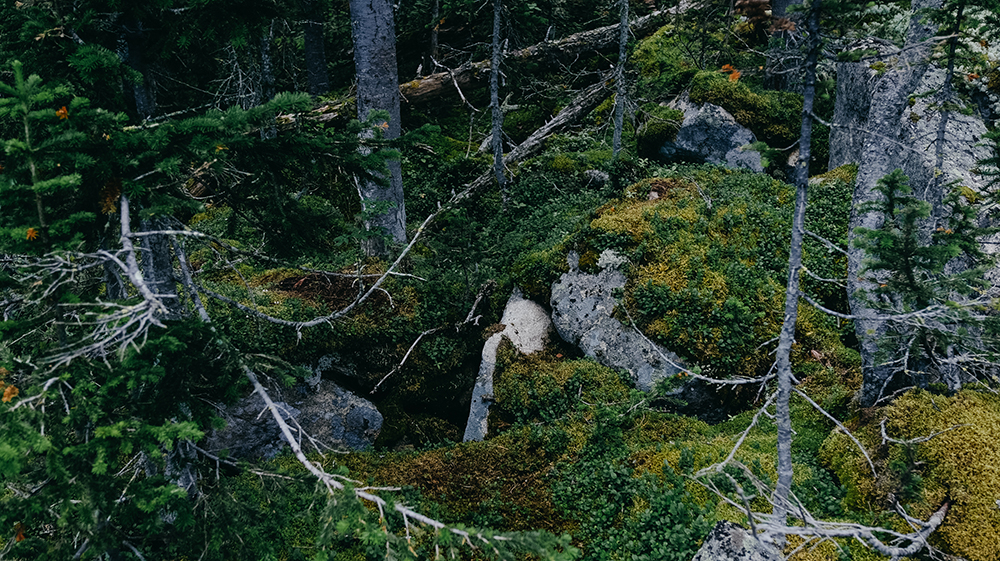
Moss-covered areas proved more resilient to disturbance compared to lichen-covered areas. The experts believe that this behavior is related, in particular, to the ability of mosses to retain more moisture and preserve the conditions more favorable for soil processes. In moss-covered areas, the soil was wetter and the moss cover was denser. This could have mitigated the effects of disturbance, preserved the soil bioactivity, and facilitated faster restoration.
 "Our work has shown that the consequences of forest disturbances cannot be evaluated solely by the area affected by fires or deforestation. The forest characteristics are also important, including the type of ground cover, which plays a key role in ecosystem resilience. This should be taken into account when evaluating the condition and restoration of Siberian forests. Forest fires and logging are becoming increasingly frequent and widespread, posing a significant threat to everyday life and altering ecological processes and carbon stocks. In the future, we plan to scale up our research. The data obtained will help in the development of forest climate projects aimed at sustainable resource use and maintaining the carbon balance," comments one of the authors Anastasia Makhnykina, Cand. Sc. in Biology, a researcher at the Sukachev Institute of Forest SB RAS.
The findings are directly relevant to the current situation in Siberia, where forest fires and deforestation are the main destructive factors. Over the past decade, 6 million hectares of Siberian forests have been damaged by fire, which is twice as much as in the previous decade. The region accounts for 10% of the total timber harvest in Russia.
The study was supported by the Russian Science Foundation, project no. 24-74-00159, and the U.S. National Science Foundation.

Share: