
New Photonic Insulator with Electric-Field Light Control
4 September 2026 г.
Scientists have developed a structure that can alter the trajectory of light using an electric field. The structure is based on a photonic topological insulator and a liquid crystal switch. The proposed device opens up prospects for creating tunable optical communication channels and high-precision defect-resistant sensors. The results obtained have been published in the Journal "Bulletin of the Russian Academy of Sciences: Physics."
Photonic topological insulators represent a special class of optical structures for controlling the movement of light within a device. They are intended for technologies that use light instead of electric signals: communication lines, sensors, photonic chips, etc. Meanwhile, in most available photonic topological insulators, the light path is specified during manufacturing and cannot be subsequently changed. Redirecting the light flow requires either changing the geometry of a device or using radiation of different wavelength, which seriously limits the functionality of the discussed systems.
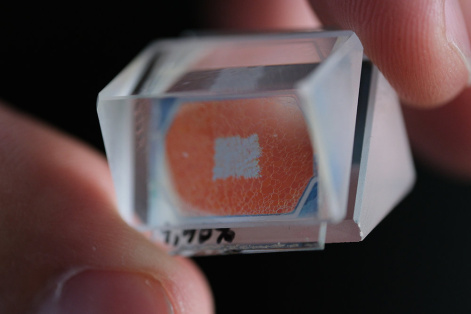
Researchers of the Krasnoyarsk Scientific Center, Siberian Branch of the Russian Academy of Sciences have proposed to solve the problem by adding the photonic structure of a topological insulator with an active element based on a cholesteric liquid crystal, in which molecules form a helical, rather than layered, structure. The embedded liquid crystal layer serves as an electric field-controlled optical switch: under applied voltage, it governs light either directly or via a bypass.
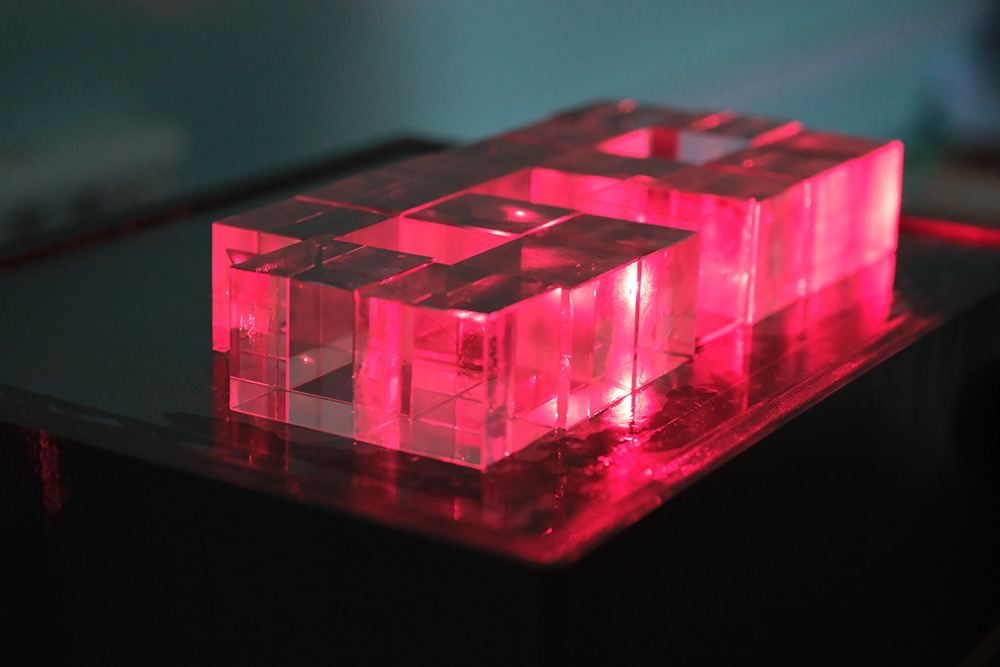
As a basis, the specialists used the previously proposed mosaic photonic topological insulator consisting of identical glass prismatic resonators, in which light propagates by means of multiple internal reflections from the edges.
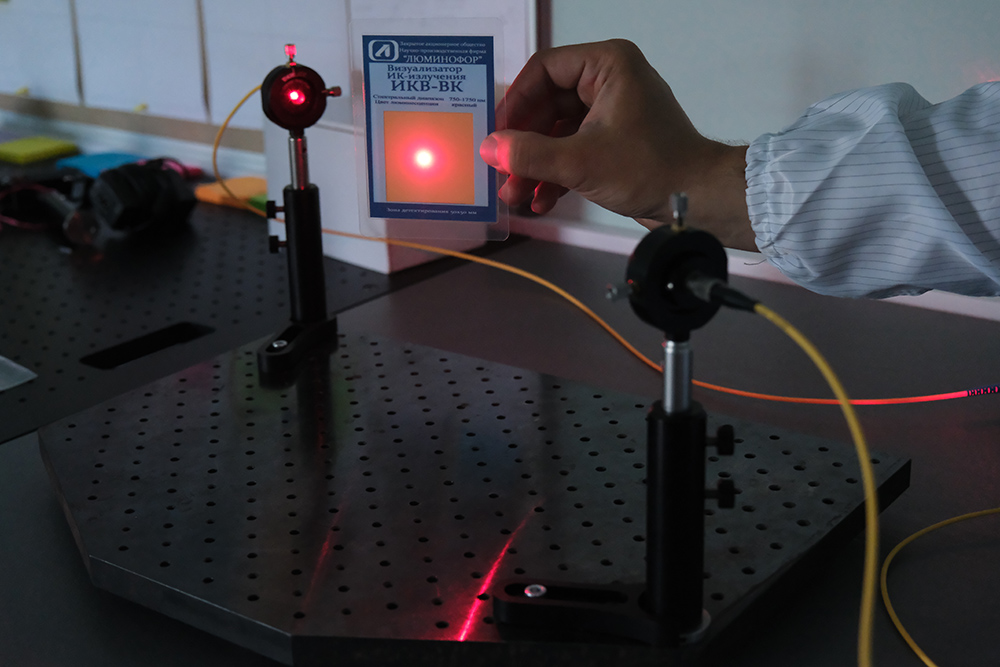
The operation of the developed device has been demonstrated experimentally. It was shown that light can be switched between different trajectories by applied voltage without reconfiguring the photonic structure or moving its elements. The device's response time when switching voltage on and off is tens of milliseconds. The switching has proven to be completely reversible: multiple operating cycles cause no noticeable changes in the characteristics of the system.
Another important feature of the proposed structure is its ability to electrically isolate an individual defective resonator within an array, while maintaining the functionality of the entire structure, even in the presence of local damage. This makes the devices defect-resistant. The new system is scalable and has a simple design.
 "Previously, the light path in photonic topological insulators was rigidly specified by the structure geometry. A liquid crystal used as a switch removes this limitation and allows the trajectory of light to be modified solely by an electric field. The light beam bypasses defective resonators without losing direction or intensity, thereby ensuring the functionality of the device even with local structural defects. This makes it possible to design reliable tunable components for optical communication and sensor systems, where both the adaptability and signal integrity are crucial. Our team has recently presented the new device at the Technoprom-2026 International Forum and received high praise," comments Petr Kim, a researcher at the Kirensky Institute of Physics.
Share: