
A New Method for Safe Platinum Recovery from Spent Catalysts
1 October 2026 г.
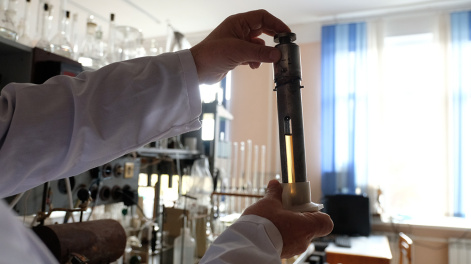
Scientists have developed a new method for safe recovery of platinum from spent catalysts. Instead of aggressive and harmful reagents, they use a combination of hydrogen peroxide and hydrochloric acid. This approach eliminates toxic emission and ensures a high metal yield. The findings have been published in the Tsvetnye Metally Journal.
Platinum is used for more than just jewelry: the metal is a raw material of strategic importance for oil refining, chemical, and automotive industries. Meanwhile, platinum deposits are being depleted. Easily accessible reserves are dwindling and extraction of new ore requires going deeper underground, which is more difficult and costly. Therefore, the recycling of secondary materials, e.g., spent automotive and petrochemical catalysts, becomes increasingly attractive. In spent catalysts, platinum is deposited onto a ceramic substrate, so a catalyst reaching the end of its service life turns into a source of the valuable metal. However, the conventional platinum extraction methods bring a danger to the environment and human health, being toxic oxidizing agents and sources of poisonous gases.
Researchers from the Krasnoyarsk Scientific Center, Siberian Branch of the Russian Academy of Sciences, in collaboration with the colleagues from the Siberian Federal University have proposed an environmentally friendly way of extracting platinum from waste without emission of toxic gases. They use hydrogen peroxide as an oxidizing agent and dissolve platinum in a hydrochloric acid under autoclave conditions.
Platinum is a noble metal, which cannot be simply dissolved in hydrochloric acid. To bring the metal into solution, it needs to be oxidized. The researchers use hydrogen peroxide, which reacts with the hydrochloric acid upon heating with the formation of molecular chlorine. The latter is an effective oxidizing agent capable of reaching platinum particles and reacting with them. The process occurs in an autoclave, a sealed chemical reactor that allows heating solutions under high pressure without boiling away and securely contains all gases, preventing their release. Thus, the hazardous chlorine does not escape and is fully consumed within the autoclave.
Next, hydrochloric acid comes into play. Platinum dissolves in the solution, while the ceramic base remains undissolved. The resulting mixture is filtered to separate the platinum solution from the ceramic. Afterward, platinum can be recovered from the solution using, for example, precipitation.
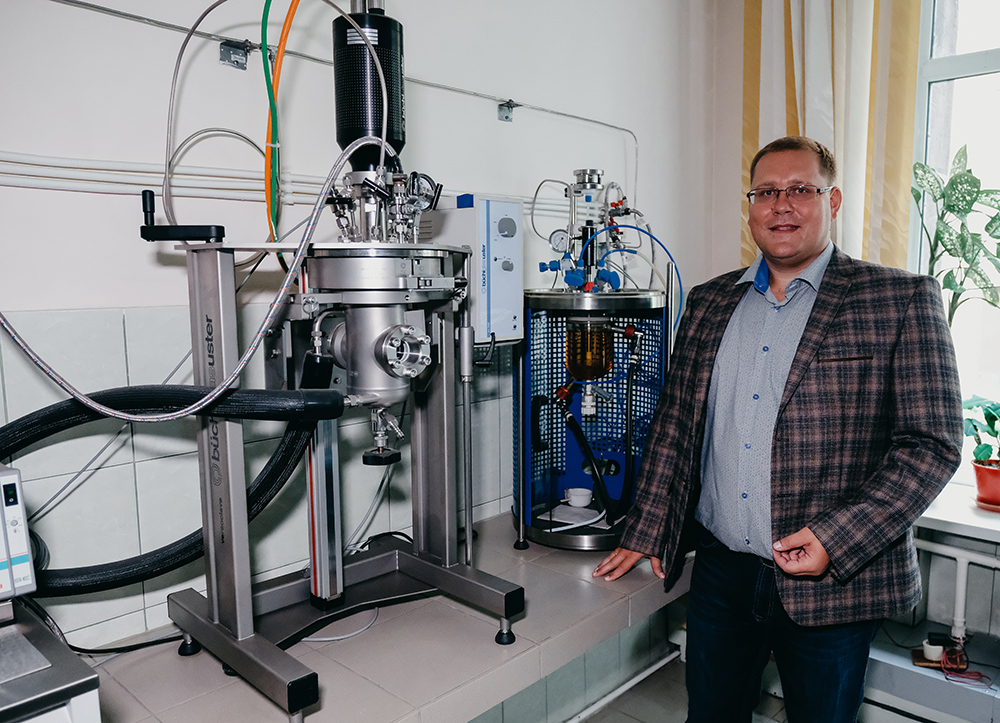 "Our approach ensures the complete conversion of platinum into its thermodynamically stable form and offers an environmentally safe alternative to conventional nitrate–chloride methods. It enables the recovery of up to 98% of the metal. The proposed method can be adapted for comprehensive processing of secondary platinum-bearing raw materials," comments Roman Borisov, Cand. Sc. in Chemistry, Senior Researcher at the Institute of Chemistry and Chemical Technology.
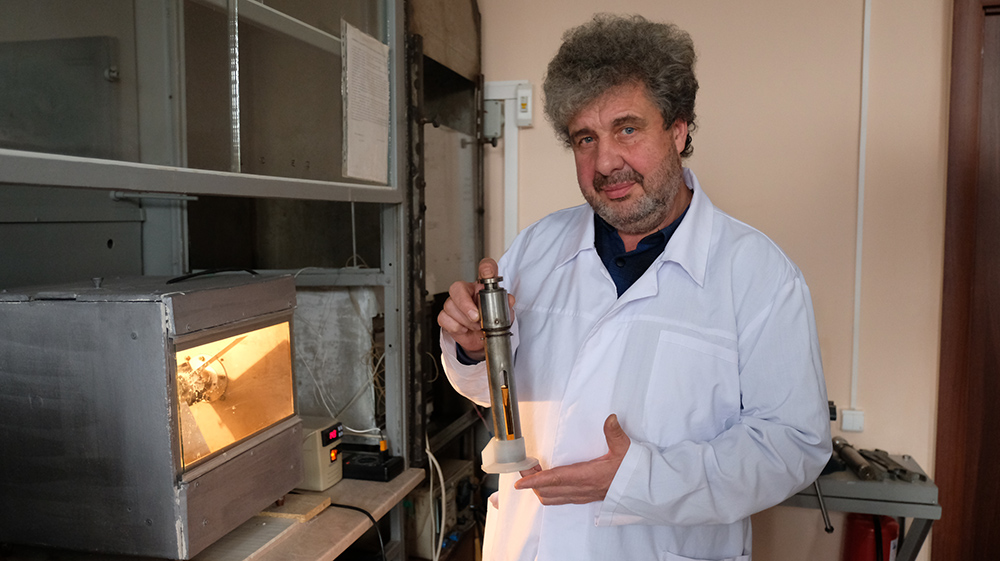 "The key advantage of our method lies in controllability of the process. By increasing the acid concentration, we create the conditions when molecular chlorine acts as a highly efficient intermediate oxidizing agent at the metal surface, continuously regenerating under the action of hydrogen peroxide. This ensures the complete and rapid dissolution of platinum, even from its refractory forms. The method completely eliminates the use of nitrates, requires no complex gas purification, and can be adapted for recycling secondary raw materials, preparation of analytical samples, and synthesis of high-purity platinum-bearing precursors," says project leader Dr. Oleg Belousov, a leading researcher at the Institute of Chemistry and Chemical Technology.
Share: