
Dangerous Pine Pathogen Discovered in Western Siberia
29 October 2026 г.
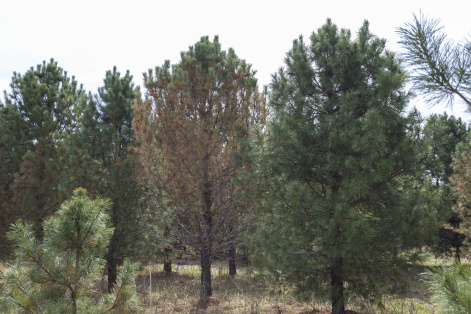
Scientists have found a dangerous fungal pathogen of pine trees, the causative agent of Dothistroma needle blight, in the southern part of Western Siberia. This marks the northernmost location in Russia where the pathogen has been detected. The fungus has been identified on three species of pine, including the Siberian stone pine widely distributed throughout Siberia. The results of the study have been published in the Forestist Journal.
Pines are the foundation of most forest ecosystems in the Northern Hemisphere. They dictate forest structure, biodiversity, and biogeochemical cycles. However, the health and productivity of these forests are increasingly under threat. Fungal pathogens are a growing problem for pine forests, since they cause disease, lead to mass tree mortality, and reduce timber quality. Furthermore, a warming climate is facilitating the northward spread of these fungi, allowing them to colonize new territories.
Researchers from the Institute of Monitoring of Climate and Ecological Systems, Siberian Branch of the Russian Academy of Sciences, in collaboration with specialists from the Krasnoyarsk Scientific Center and the All-Russia Plant Quarantine Center, have found the pathogenic fungus Dothistroma septosporum in the southern part of Western Siberia. The fungus is the causative agent of Dothistroma needle blight, a dangerous infectious disease affecting conifers, which leads to needle necrosis and thinning of tree crowns, causing significant damage to forestry.
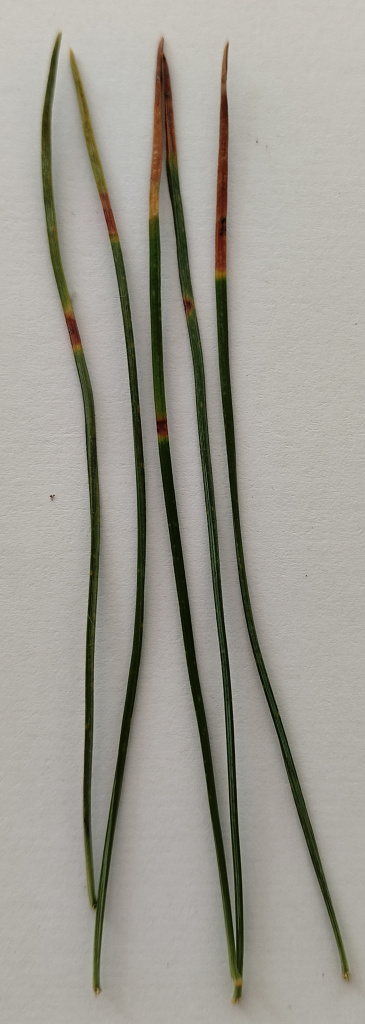
The pathogen has been discovered in the Tomsk oblast, on the grounds of a research station of the IMCES SB RAS. This is the northernmost documented location in the eastern part of Russia where this pathogen has been identified. The site hosts an extensive collection of native and introduced conifers, including grafted clones and pine progeny grown from seed. The pathogen has been found on three species: Pinus sibirica, P. koraiensis, and P. pumila. An initial symptom of infection is brick-red stripes and spots on the needles, which are followed by progressive drying of the latter and the dieback of shoots.
To understand the fungus’s subsequent behavior, the researchers have examined the susceptibility of infected pines to the pathogen. The three pine species differed in their degree of sensitivity to the fungus. The disease is most severe in the Siberian pine and the dwarf stone pine, with widespread damage to the needles and the dieback of shoots. In P. koraiensis, the symptoms are less pronounced, affecting only minor segments of the needles.
The scientists have concluded that the infection severity varies not only between species, but also between planting material types. Across all the species, offspring grown from seeds exhibited only mild symptoms, whereas those propagated vegetatively were affected much more seriously. In particular, vegetative clones of the Siberian pine show greater damage to their crowns, with some instances of the plants dying. In contrast, seed-derived offspring of the same species displayed only moderate symptoms. The same pattern is observed in the dwarf stone pine: offspring grown from seeds proved more resistant than grafted specimens. As noted by Evgeniya Zhuk, a senior researcher at the IMCES SB RAS, these differences can be attributed to the varying geographical origins of the seed-derived and vegetatively propagated plants, as well as to the distinct microenvironmental conditions at their respective growing sites.
"The mild winters of recent years have likely facilitated the pathogen spread, although no outbreaks have been detected in natural forests to date. The fungus is beginning to colonize new territories. Initially, it was believed that this pathogen primarily affected forests in the Southern Hemisphere. Meanwhile, since the 1990s, there has been a sharp increase in Dothistroma needle blight cases across North America and Europe, including Russia. It was previously thought that pine species in the Pinus subgenus Strobus had the low susceptibility to this fungus, but our results show that they are at least moderately susceptible. If the fungus continues to spread, it could have significant ecological and economic consequences. Dothistroma needle blight causes mortality in young conifer stands and reduces timber quality. In Russia, large-scale protective measures against this pathogen have not yet been implemented, as it is still considered rare in the country," comments Vera Senashova, Cand. Sc. in Biology, a senior researcher at the Sukachev Institute of Forest SB RAS.
"Identifying the reasons for the Korean pine’s resistance to the pathogen could help in developing approaches for selecting resistant seedlings and establishing economically valuable populations. No disease outbreaks have been observed in the natural forests of Siberia thus far. However, introduced pines can prove more susceptible to the pathogen than native species, meaning that trees in forest nurseries could be the first to suffer," explains Evgeniya Zhuk.
This study was supported by the Russian Science Foundation, project no. 25-26-00284.
In 2025, the Krasnoyarsk researchers discovered that another dangerous fungus, Diplodia sapinea P. Karst., has also reached Siberia. This species causes necrosis in Scots pine. Previously, it was found only in the regions with a mild climate.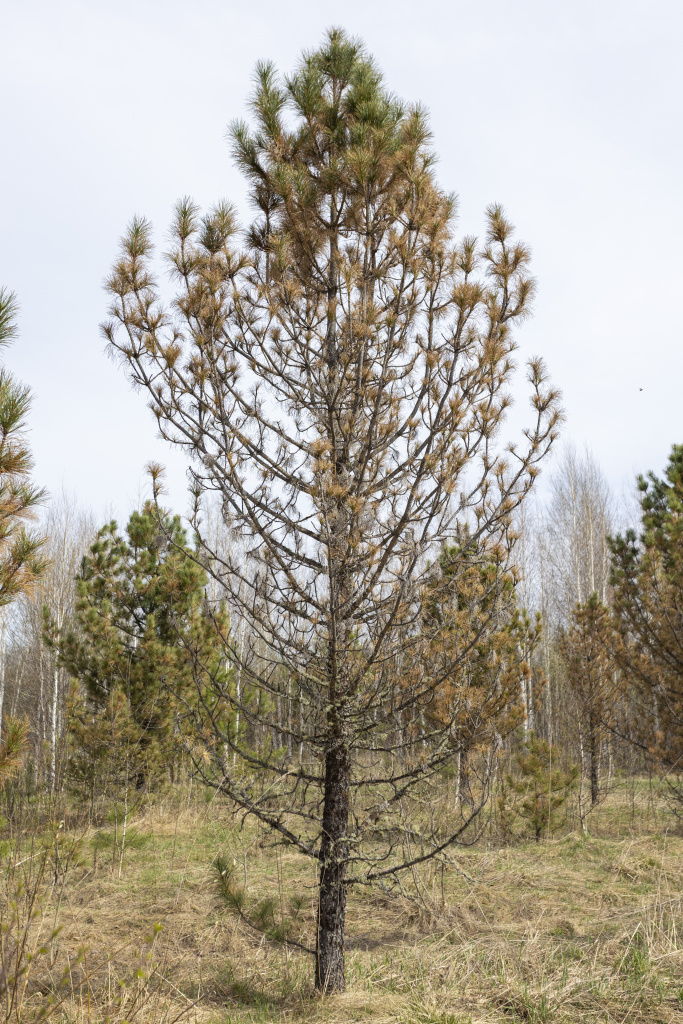
Share: