
Hidden Value of Salt Lakes: Home to Hundreds of Endangered Species and Protection from Dust Storms
7 September 2026 г.
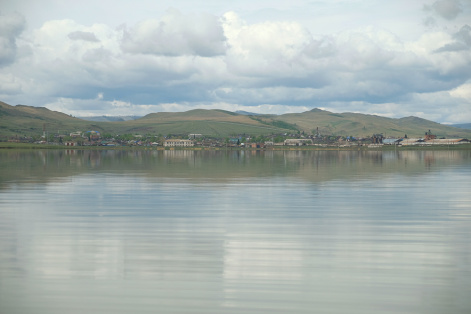
Salt lakes are proving more important than previously thought, being home to hundreds of endangered species and providing a variety of ecosystem services as sources of valuable salts and dust storm protectors. Meanwhile, many salt lakes are in danger of disappearing. Scientists have established the reasons for preserving these ecosystems. The results of a comprehensive study have been published in the Nature Communications Journal.
Salt lakes, accounting for over 45% of the world's lake water, are among the most vulnerable ecosystems. They are highly sensitive to the variation in the balance between water inflow and surface evaporation and, therefore, react strongly to the climate change and human economic activity. A rise or fall of the salt lake water level is accompanied by the salinity changes, which lead to reduction of the number of species living in the lake. Despite the serious environmental impacts, salt lakes, in the absence of major disasters such as the drying up of the Aral Sea, are rarely prioritized by international and national environmental protection programs, as the value of salt lakes to nature and humans is underestimated.
An international team of scientists, including a coordinating researcher from the Krasnoyarsk Scientific Center, Siberian Branch of the Russian Academy of Sciences, has demonstrated that salt lakes play a more important role than is commonly believed. Salt lakes support numerous species, including endangered ones, and provide a wide range of economically and culturally significant ecosystem services.
The major and, perhaps, most surprising finding of the study is that the total number of ecosystem services provided by lakes does not decrease with increasing salinity. Previously, there was an intuitive hypothesis that, since increasing salinity leads to a decline in species diversity, the number of services should also decrease. However, the study refuted this assumption. With increasing salinity, there is not a decrease in the number of services, but rather their substitution. The conclusion that the lake does not become less valuable simply due to salt concentration changes directly affects the environment conservation priorities and economic assessments.
The second key finding of the study, which covered 85 salt lakes in different regions all over the world, concerns biodiversity. It was shown that the lakes included in the examination support 200 threatened or near threatened species included in the IUCN Red List. More than half of these species are birds that use these lakes for feeding and resting during seasonal migrations. Thus, salt lakes support not only aquatic, but also terrestrial biodiversity. This is of special importance in semi-arid climates. Due to the high salinity, the number of species in these lakes declines, but organic matter production sharply grows, transforming the lakes into specific food islands for migrating birds, mammals, and other terrestrial animals. This makes salt lakes indispensable for the conservation of global avifauna and arid region fauna. The evaluation of salt lakes by solely their aquatic fauna would significantly underestimate their importance for species conservation.
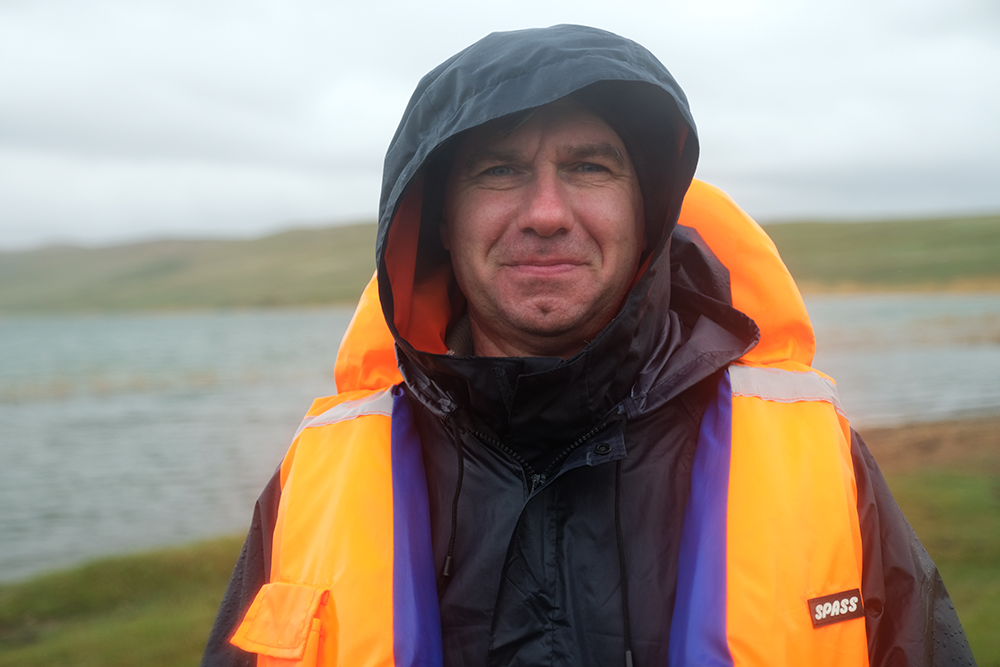 "Russia is a country with a vast number of salt lakes, which provide the entire spectrum of ecosystem services. In particular, Lake Baskunchak provides up to 30% of all Russian salt. Lake Razval in the Orenburg oblast, according to our data, holds the world record for the highest density of tourists per unit water area. The Torey Lakes in the Daurian Steppe are located on one of the most intense seasonal bird migration routes. The salt lakes of Altai are a source of Artemia cysts, accounting for at least 10% of the global production of this valuable resource," comments one of the study's initiators Egor Zadereev, Cand. Sc. in Biology, a leading researcher at the Institute of Biophysics SB RAS, President of the International Society for Salt Lake Research (ISSLR).
A number of fundamental ecosystem services characteristic of salt lakes are often overlooked. For example, the microclimate regulation and dust storm prevention are largely ignored in conventional approaches to evaluating the importance of these ecosystems. The value of salt lakes also lies in their great contribution to genetic diversity. They harbor organisms that enhance the planet's ability to adapt to local and global environmental changes.
The experts believe that the main threats to the discussed ecosystems are climate change and human overuse of water. In combination with the high sensitivity of lakes to minor water balance changes, this underscores the need for effective protection and management of salt lake ecosystems.
The scientists have formulated recommendations for the sustainable management of salt lakes. They propose to monitor the entire catchment area, including groundwater, the excessive withdrawal of which for irrigation and industry leads to shallowing and salinization of the lakes. One should take into account the natural interannual variability of the lakes, assess their condition using the dynamic indicators reflecting the current climatic reality, and carry out long-term monitoring of water levels, salinity, and the state of biological communities, since responses of the ecosystems to external factors are often manifested with a delay of several years. The management strategies should be adaptive and allow for adjustments upon variation in climate conditions. These recommendations are aimed at developing tools for comprehensive monitoring aimed at preserving the biodiversity and ecosystem services of salt lakes and preventing their degradation.
"The idea for this study arose in 2018 in a discussion with German ecologist Alfred Burian at the International Limnology Conference in China. We discussed why salt lakes are so undervalued and concluded that, to alter the situation, the large-scale data collection across the globe is required. After that was a lengthy search for interested colleagues in other countries, data collection, and analysis, all of which were hampered by COVID-19 and two extended vacations that Alfred took. Ultimately, 65 scientists from 20 countries were involved in the work. Finally, it has been completed and we are presenting the results," comments Egor Zadereev.
Share: