
Shelterbelts and Gentle Cultivation for Preserving the Soil of Khakassia
29 July 2026 г.
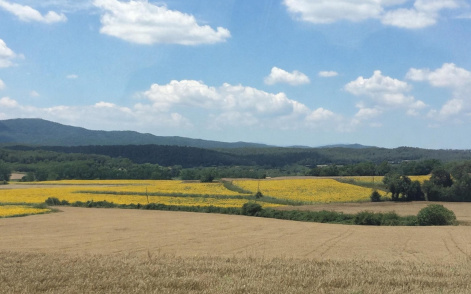
Scientists have established the causes of dust storms in the steppe zone of Khakassia and found the methods that can be used to stop this process. In the last century, the widespread plowing of virgin lands resulted in soil depletion. This can be mitigated using shelterbelts and gentle soil cultivation. The results of the study have been published in the Journal Agrarnaya Nauka.
The worldwide desertification causes agricultural land degradation and crop yield declines. This problem is particularly acute in the Republic of Khakassia. The local steppes are characterized by black soil. Spring winds easily blow away the fertile topsoil from the fields, which means direct crop loss for the agricultural sector. Therefore, methods for combating desertification and soil degradation are needed.
Researchers from the Institute for Agrarian Problems of Khakassia (Krasnoyarsk Scientific Center, Siberian Branch of the Russian Academy of Sciences) have estimated the soil fertility changes in Khakassia under the action of agriculture over the past 70 years and found methods for stopping the transformation of fertile land into desert one and preventing the destruction of agricultural land.
The specialists have studied the effect of natural and anthropogenic factors on the soil fertility and condition in the steppes of Khakassia. The conventional plowing to a depth of 20 cm during the development of virgin and fallow lands in the 20th century led to severe soil degradation. This destroyed vegetation and left the soil vulnerable to weathering and leaching of the fertile soil layer. In particular, after the land development at the Beisky state farm, 80% of the investigated arable land was subject to wind erosion and 16%, to water erosion. The soil was literally blown away from the fields, and spring dust storms became commonplace.
By now, the situation has changed. During reclamation, heavily degraded lands with the eroded valuable topsoil are not plowed and the remaining areas are treated more carefully. As a result, wind erosion occurs locally, primarily in the fields where repeated mechanical tillage is carried out.
The specialists have concluded that, to prevent soil degradation in the low-mountain steppes of Khakassia, it is necessary to abandon deep plowing and repeated tillage, use gentle cultivation methods, remove severely eroded lands from cultivation, and implement shelterbelt systems. Shelterbelts serve as a protection, reducing wind speed and soil transport.
"The anthropogenic pressure on steppe ecosystems, particularly extensive tillage, unregulated grazing of sheep and goats, and the lack of soil conservation techniques for developing virgin and fallow lands led to the wind erosion outbreak, destruction of vegetation, and soil degradation in the 1960s. The redevelopment, unlike the initial development, is proceeding at a slow pace and in small volumes. The shelterbelts from Siberian larch, Siberian elm, and black poplar increase the agroecological resilience of steppe farmland. As a result, the soil degradation has been significantly reduced. A combination of technologies and management measures has halted the erosion processes. For example, in 2024, near the village of Beya, there were 17 days of strong winds in the spring. Near open fields, the fine soil deposits along the roadsides reached a thickness of 5 cm, while in the fields protected by the shelterbelts and with gentle tillage, there was almost no soil movement. Now, it would be too early to say the problem has been completely resolved, but the approach used could stabilize the situation in the Republic," comments Dr. Egor Chebochakov, Honored Agronomist of Khakassia and Russia, senior researcher at the Institute for Agrarian Problems of Khakassia.
Share: